.jpg)
ENORM: Ambition, Scale, and the Promise of Insect Protein
Founded in 2017, Enorm Biofactory set out to transform food-industry by-products into high-value insect protein and oil using Black Soldier Fly larvae (BSFL) as its core technology. Headed by CEO Carsten Lind Pedersen and COO Jane Lind Sam—a father-daughter leadership team—ENORM attracted considerable attention in the alternative protein landscape. In 2022, the company secured €50 million in funding, including from major agricultural cooperative DLG, signaling strong confidence in its mission. (agtechnavigator.com)
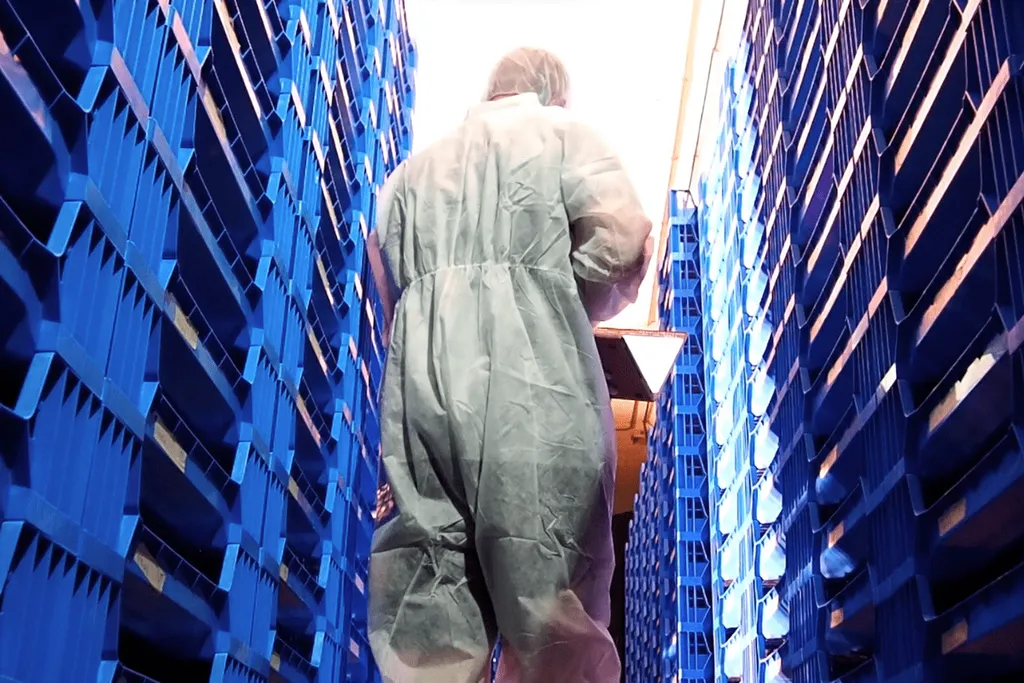
Located in Hvirring, in Eastern Jutland, the facility’s 22,000 square metres of purpose-built production space was completed in late 2023. With plans to process thousands of tons of larvae annually—enough feedstock to produce over 10,000 tonnes of insect meal per year—ENORM emerged as one of Northern Europe’s most ambitious BSF factories. Its strategy was to source residual waste streams, like delactosed permeate (a dairy by-product), for feed, positioning itself within the circular economy. (agtechnavigator.com)
Trials were promising: ENORM collaborated with the Technical University of Denmark (DTU) on aquaculture trials involving species like tilapia and trout, which showed good protein digestibility for their insect meal. They also received support from companies like Aller Aqua to validate feed performance. Regulatory approval steps remained ongoing. (agtechnavigator.com)
Momentum Slows: Operational Realities and Delays
Even as ENORM’s infrastructure came online, it faced hurdles. Production scale-up was delayed, sensitive to multiple factors—regulatory approvals, construction setbacks, and the inherent complexity of operating a novel production site in the insect protein sector. Though larvae harvests began early 2024, full commercial output lagged behind what had been pitched during the funding and planning phase. (agtechnavigator.com)
Meanwhile, price pressures began to emerge. ENORM believed premium pricing for insect meal was possible, but industry demand cooled by late 2024, shrinking the customer’s willingness to pay extra over established protein sources like fishmeal and soy. With market momentum fading and buyers hesitating, ENORM found itself in a tight spot. (agfundernews.com)
Operating costs compounded the pressure. In the Nordic climate, energy, heating, ventilation, and compliance are non-trivial expenses. Automation, though promising long-term efficiency gains, also required upfront investment and steady throughput to pay off. Until the facility reached a sufficient production scale, margins were squeezed. (agtechnavigator.com)
Reconstruction and Bankruptcy: When Recovery Efforts Ran Out of Time
In April 2025, ENORM entered a court-supervised reconstruction process, a legal framework designed to give struggling companies breathing space to reconfigure models or locate rescue capital. Its leadership hoped to explore different business models and bring in fresh investors while keeping the facility intact. (agfundernews.com)
Despite maintaining a core operational team and preserving its platform in anticipation of a turnaround, ENORM was unable to reverse the downward pressure of weak sales and delayed market adoption. On October 30, 2025, the court issued a bankruptcy decree, with attorney Henrik Selchau Poulsen appointed as trustee. Creditors were instructed to submit claims by the end of November. (agfundernews.com)
Contributing Factors to the Collapse
Multiple interconnected causes led to ENORM’s failure. Among them:
- Demand & Pricing Challenges: Interest in insect protein peaked earlier, but key customers balked at the price differential when compared with conventional proteins. The premium ENORM hoped to sustain did not hold. (agfundernews.com)
- Delays & Commissioning Complexity: Although construction was officially complete by late 2023, getting to full capacity involved navigating regulatory approvals, trial running, and refining production systems. These delays drove up costs and deferred revenue. (agtechnavigator.com)
- High Fixed and Operational Costs: Energy, climate control, waste handling, logistics—especially in colder climates—added to overheads. Without high throughput and optimized operations, breakeven was always distant. (eagmark.net)
- Investor Expectations and Timing Mismatch: Investors provided significant capital but expected returns within timelines that proved difficult to meet. As projections slipped, securing follow-on capital became more challenging. (agtechnavigator.com)
- Sector-Wide Headwinds: ENORM was not alone. Other insect protein ventures in Europe and abroad—such as Ÿnsect in France and Inseco in South Africa—faced similar financial stress, restructuring or collapse. The sector’s environmental promise had yet to translate into consistent profit. (agfundernews.com)
What It Leaves Behind and What’s Next
ENORM’s bankruptcy delivers a stark message to the Black Soldier Fly industry: if you cannot compete directly with fish meal on price, you will eventually go out of business. The fundamental economics are unforgiving. Fish meal trades at approximately $1,600-$1,800 per ton, and that is the benchmark every BSF producer must meet—not exceed by 20%, 30%, or 50% while hoping customers will pay a sustainability premium.
The path forward is clear but demanding. BSF operations must source waste and by-products that cost less than €20 per ton—materials like food waste, brewery spent grains, or agricultural residues that would otherwise be disposed of. This isn’t just about environmental storytelling; it’s about building a cost structure that can sustain profitability when selling insect meal at fish meal parity pricing. ENORM, like many others in the sector, failed to achieve this economic equation.
Companies betting on premium pricing for “sustainable protein” are chasing an illusion. The aquaculture and animal feed industries operate on thin margins and make purchasing decisions based on cost per unit of protein and digestibility—not on sustainability narratives, no matter how compelling. If BSF meal costs $2,500-$3,000 per ton while fish meal sits at $1,700, the choice is obvious, and no amount of circular economy rhetoric will change the procurement decision.
The industry’s survivors will be those who recognize this reality early. Waste-to-value economics are non-negotiable. Operations must secure ultra-low-cost feedstock, optimize energy efficiency to minimize operational overhead, and achieve the scale necessary to drive down per-unit costs. Companies that cannot deliver insect protein at $1,600-$1,800 per ton—matching fish meal—are simply building expensive monuments to good intentions.
ENORM’s 22,000 square meter facility and €50 million in funding couldn’t overcome the fundamental mismatch between its cost structure and market reality. The infrastructure may find new life under different ownership, but only if the new operators solve what ENORM could not: producing insect protein that competes on price, not on principle. Until the BSF industry embraces this hard truth, bankruptcies like ENORM’s will continue to define the sector’s trajectory.