What is in the English BSF operating manual, who it is for, and the thesis behind it: smaller plants close to waste, and unit economics before scale.
A new Waste Management meta-analysis puts ash beside protein and fat in BSFL process control, with useful thresholds for substrate pilots.
Innovafeed's warning: fishmeal spikes are not a BSF strategy. Scarcity opens the trial. 2% attractant or 5–10% health-window use has to hold after prices fall.
The next El Niño is an aquafeed resilience test. BSF only helps if it is already qualified: specified, trialled and contractable before the shock.
Peru's 2026 anchoveta ban and fishmeal near US$3,000/t are a feed-security shock. BSF is an alternative, not a tonne-for-tonne fishmeal replacement.
Aquaculture feed security is input sovereignty: 2026 fish oil at a decade low, insect meal up to 20% in salmon and trout, and EU substrate rules still tight.
The EU opened insect PAP for aqua, poultry and pig feed. Catering waste, manure and meat-and-bone meal stay banned. Substrate access is still the bottleneck.
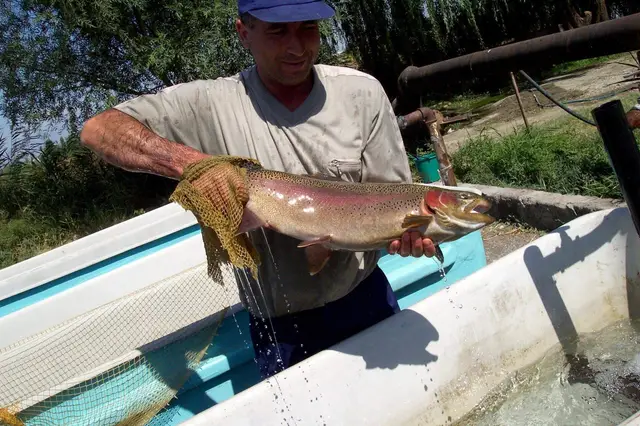
Riesenbach et al. tested BSF full-fat meal, defatted meal, oil and chitin in rainbow trout. 4% oil and 1% chitin helped in low-soy diets; high-soy did not.
Ma et al. tested 2.5% and 5% whole-body or defatted BSFL in high-soy rainbow trout diets. The result is one of the clearest arguments for selling BSF as a complementary functional ingredient rather than only as fishmeal replacement.
Onomu and Okuthe's 2024 review: position BSF as a functional aquafeed additive for health, resilience and feed efficiency, not crude protein.
Global fishmeal output fell 28% in Q1 2026 (IFFO). That tightness strengthens BSF in aquafeed as a planned ingredient, not a crude fishmeal substitute.
Aquaculture Magazine's review of functional feed additives is a useful prompt for the insect sector: BSFL meal may be more valuable as a targeted gut, immune and diet-stability tool than as a blunt fishmeal replacement story.
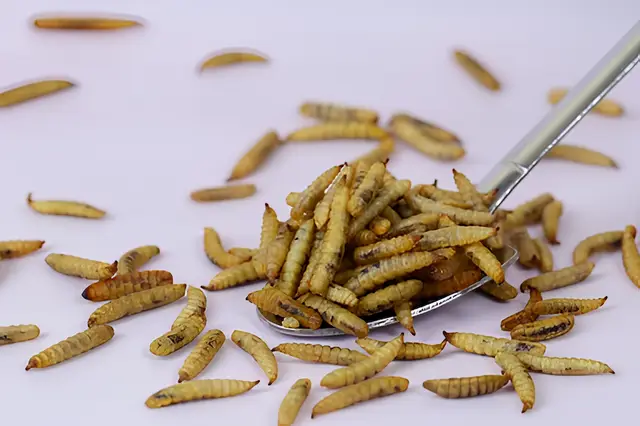
Minerals in BSFL can be steered via substrate. A 2026 paper found brewery spent grains outperformed conventional feed for zinc and manganese accumulation.
A new Food Microbiology paper reports that Bacillus cereus persisted through Hermetia illucens rearing, with larvae and frass requiring post-rearing treatment even when authorized substrates were used.
We use cookies to improve your experience and analyze website traffic. By clicking "Accept All", you consent to our use of cookies for analytics and marketing purposes. Read our privacy and cookie policy