.jpg)
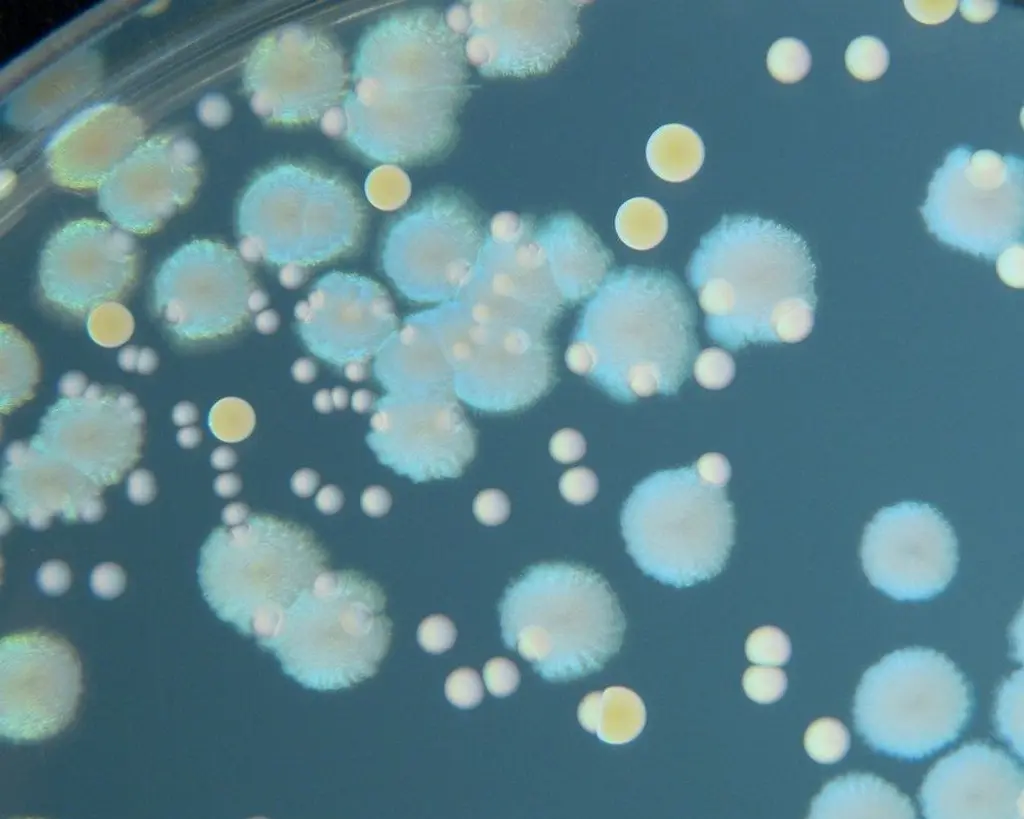
A new paper in Food Microbiology puts a useful constraint around one of the more comfortable assumptions in insect bioconversion: black soldier fly larvae should not be treated as a reliable sanitation step for spore-forming foodborne bacteria.
The study, Dynamics of Bacillus cereus during rearing of Hermetia illucens on authorized and unauthorized substrates under European legislation, reports that Bacillus cereus persisted during BSF rearing and was consistently detected in larvae and frass. The authors compared authorized substrates under EU rules with unauthorized waste streams such as school canteen waste and expired unpackaged retail food products. The result is not simply that illegal or dirtier inputs are risky. The more operationally important result is that larvae and frass from both authorized and unauthorized substrates showed similar contamination levels after rearing.
That distinction matters for industrial producers. Substrate approval, supplier control, and incoming material testing remain essential, but they do not remove the need for validated post-rearing microbial controls. If B. cereus can persist through the process, the control point cannot be assumed to sit inside the larvae.
What the paper found
The paper was published as article 105184 in Food Microbiology, volume 140, with DOI 10.1016/j.fm.2026.105184. The available abstract and article preview give several concrete findings.
After seven days of spontaneous fermentation, B. cereus was undetectable in the authorized substrates tested, while unauthorized waste substrates contained high loads, reported at 5.2 to 6.0 log CFU/g. Aerobic spore counts were also significantly higher in unauthorized substrates.
That part is unsurprising. Catering-type waste streams are precisely the kind of material European legislation excludes from insect feed, and the paper repeats the core regulatory point: insects in the EU cannot be fed with catering waste, household or restaurant scraps, manure, or other prohibited animal by-product streams. Regulation (EU) 2017/893 opened the use of insect processed animal proteins in aquaculture feed, but it did not open the door to arbitrary waste inputs.
The more useful finding comes after rearing. Despite the strong difference between initial substrate contamination, larvae and frass showed similar total mesophilic and spore counts, with B. cereus consistently detected. The authors conclude that BSF larvae were unable to significantly reduce B. cereus during entomoconversion. They also suggest possible vertical transfer, because the bacterium persisted throughout BSF development rather than appearing only as a direct reflection of the feed substrate.
The strain-level detail makes this more than a generic hygiene note. The study detected potentially enterotoxigenic group III B. cereus strains carrying nheI and cytK, and reports that group IV strains initially present in substrate became dominant in larvae and frass by day 14. For feed and frass applications, that shifts the question from “is there contamination?” to “which spore-forming strains can survive the process and what treatment is validated against them?”
Why this is uncomfortable for BSF operators
BSF systems are often described as bioconversion systems, and rightly so. Larvae change the physical, chemical, and microbial profile of organic substrates. But there is a dangerous shortcut from “the process changes the substrate” to “the process sanitizes the substrate.” This paper argues against that shortcut for B. cereus.
That is especially relevant because B. cereus is not a fragile vegetative contaminant. It is a spore-forming bacterium. Spores can resist processing conditions that would reduce many other microbes, including drying, boiling, freezing, and other common treatments depending on the exact conditions used. A BSF plant that measures only broad indicators after harvest can miss the more stubborn hazard: spores that remain viable through drying, storage, milling, transport, and formulation.
A 2024 paper in Foods, Evaluation of the Microbial Quality of Hermetia illucens Larvae for Animal Feed and Human Consumption, already pointed in the same direction. It combined literature review and data from French industrial farms and concluded that raw BSF larvae can carry high microbial loads, with hazards including Bacillus cereus, Clostridium perfringens, Cronobacter spp., Escherichia coli, Salmonella spp., and coagulase-positive Staphylococcus aureus. That paper also noted a practical detail operators know well: larvae are consumed or processed whole, and harvesting by sieving does not guarantee complete separation from fine frass particles adhering to larvae.
Taken together, the message is narrow but important. This is not an argument against BSF production or against using former foodstuffs and plant by-products. It is an argument against weak HACCP design that relies on larvae, fasting, sieving, or drying as vaguely defined microbial risk reducers without proving what they do to spore-formers.
The frass implication is just as important as the feed implication
The paper explicitly includes both larvae and frass. That matters because frass is often discussed as a fertilizer, soil amendment, or biostimulant stream, while most microbiological safety discussion concentrates on protein meal and oil.
If frass carries persistent B. cereus or other spore-forming bacteria, the relevant risk assessment changes by destination. A feed ingredient and a soil amendment are not regulated or used in the same way, but both require control logic. For frass, the question is not only whether the nutrient profile, organic matter, and agronomic effect are attractive. It is also whether the product can be stabilized, treated, stored, and applied in a way that is compatible with microbial safety expectations and local fertilizer regulation.
This is where operators should be careful with “natural microbiome” language. A live or microbially active frass product may have agronomic value, but that does not remove pathogen control requirements. Conversely, aggressive heat treatment may reduce hazards but also change the microbial and functional properties being marketed. There is a real process-design tradeoff here, not a branding problem.
What should change inside a plant
For a BSF producer, the practical consequence is not to panic about B. cereus. It is to stop treating microbiology as a final certificate and start treating it as a process variable.
The first control layer is incoming substrate governance: approved categories, supplier qualification, traceability, storage conditions, time from generation to processing, particle handling, fermentation behavior, and routine testing where the risk profile justifies it. The new paper shows why unauthorized waste streams remain microbiologically difficult, with 5.2 to 6.0 log CFU/g B. cereus after spontaneous fermentation. But it also shows that authorized substrates do not automatically guarantee clean larvae or clean frass at the end.
The second layer is validated post-harvest treatment. Drying parameters need to be specified as time, temperature, moisture, water activity, load geometry, and microbial target, not just as “dried product.” If a process is meant to control vegetative bacteria but not spores, that limitation should be explicit in the HACCP plan and in product risk assessment.
The third layer is separation and cross-contamination control. Larvae, residual substrate, and frass are physically intertwined at harvest. If fine frass adheres to larvae, or if conveyors and bins move material across clean and dirty zones without strong zoning, a validated kill step can be undermined by recontamination. In practice, this means the layout, cleaning regime, airflow, dust handling, and packaging area matter as much as the headline treatment technology.
The fourth layer is product-specific testing. Whole dried larvae, defatted meal, oil, hydrolysates, and frass do not carry the same risk profile. Nor do pet food, aquafeed, poultry feed, pig feed, fertilizer, and research-grade products. B. cereus should be interpreted in relation to the product form, customer specification, legal destination, and intended storage conditions.
The open question for the sector
The strongest part of this paper is that it narrows the debate. The question is no longer whether BSF larvae can transform organic side streams. They can. The question is which hazards survive that transformation, which hazards are amplified or selected, and where the validated control points belong.
For European producers, the regulatory pressure will remain conservative if the sector cannot show robust control of precisely these hazards. Expanding the substrate base toward more urban or peri-urban food waste streams may be economically attractive, but papers like this give regulators an obvious reason to ask for stronger evidence before relaxing feed rules.
For operators, the operational lesson is immediate: do not let substrate legality, larval performance, or conversion yield stand in for microbial validation. B. cereus is a reminder that a profitable BSF process still has to behave like a food or feed process when the output enters food, feed, pet food, or fertilizer value chains.
Sources
- Doublet, B., Sabatier, D., Sefah, A., Broussolle, V., Chateau, A., and Poncet, S. Dynamics of Bacillus cereus during rearing of Hermetia illucens on authorized and unauthorized substrates under European legislation. Food Microbiology, volume 140, article 105184. DOI: 10.1016/j.fm.2026.105184.
- Brulé, L. et al. Evaluation of the Microbial Quality of Hermetia illucens Larvae for Animal Feed and Human Consumption: Study of Different Type of Rearing Substrates. Foods, 2024, 13(10), 1587.
- European Commission. Commission Regulation (EU) 2017/893, amending rules relevant to insect processed animal proteins and insect feed substrates.