.jpg)
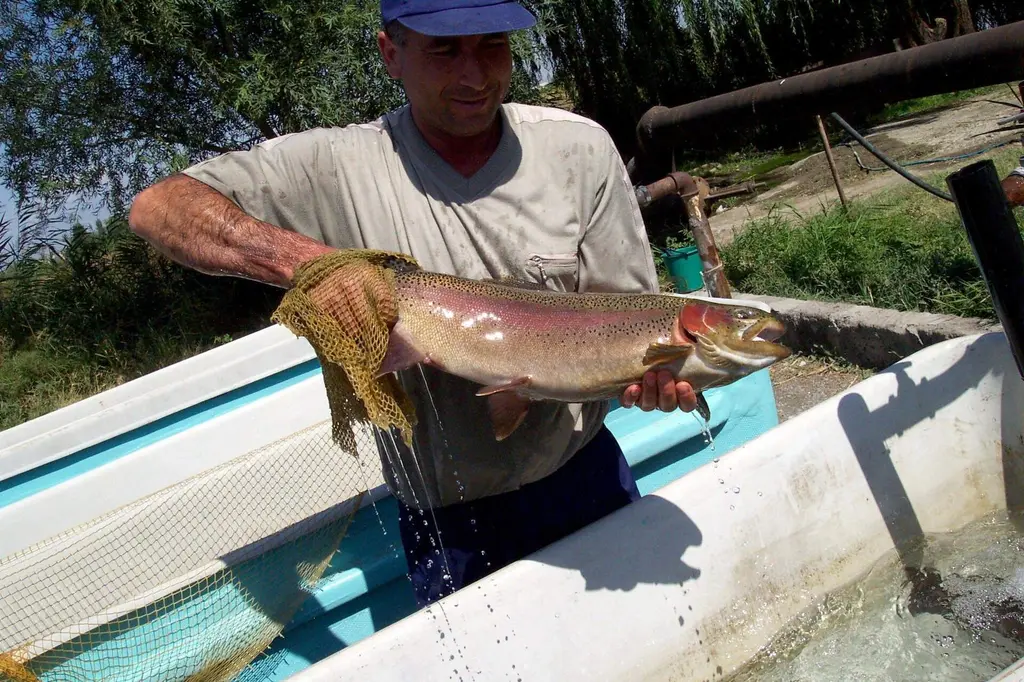
Riesenbach et al. tested black soldier fly fractions in rainbow trout: full-fat meal, defatted meal, extracted oil and extracted chitin. The 2026 Aquaculture paper asks which part of the insect ingredient is doing the work, not whether “BSF meal” is one thing.
The paper is Full-fat meal, defatted meal, oil and chitin from black soldier fly in low and high soybean-based diets on growth performance and nutrient retention of rainbow trout, by I. Carmi Riesenbach and colleagues. Full-fat meal, defatted meal, extracted oil and extracted chitin have different composition, different formulation effects and probably different commercial roles. Treating them as interchangeable makes it harder for aquafeed formulators to see where the value sits. That is the same functional additive question: which fraction earns space in the formula.
Riesenbach et al. tested juvenile rainbow trout in two 12-week feeding trials. The diets used low or high soybean-based formulations, described as unchallenged and challenged dietary contexts. Fishmeal and fish oil were replaced with the inclusions below. The trials were run at 8.6°C, with initial fish weights of 29.63 ± 4.41 g in the first trial and 89.5 ± 1.6 g in the second.
| Fraction | Inclusion tested | What the trials showed |
|---|---|---|
| Full-fat BSF meal | 5% or 10% | Did not reduce growth vs control. Context-dependent. |
| Defatted BSF meal | 5% or 10% | Weaker than oil/chitin in low-soy. Similar intake cuts in high-soy. |
| Extracted BSF oil | 4% | Improved growth indicators vs 5–10% defatted in low-soy, not vs control. |
| Extracted BSF chitin | 1% | Same direction as oil in low-soy. No rescue in high-soy. |
Those fraction effects also show up downstream in fillet work. How black soldier fly meal shapes fish fillet quality is the species-level quality read.
The result is more nuanced than a replacement headline
In the low soybean-based diets, BSF oil and chitin improved growth performance indicators including final weight, weight gain, FCR and thermal growth coefficient compared with diets containing 5% or 10% defatted BSF. Those improvements were not significant versus the control diet, but they aligned with higher lipid intake, protein retained and energy retained in fish fed the BSF oil and chitin diets.
In the high soybean-based diets, BSF meals, oil and chitin did not enhance growth performance or nutrient retention. Fish fed 5% and 10% defatted BSF showed similar reductions in weight gain and feed intake, including protein, lipid and energy intake.
The authors’ overall interpretation is still positive for BSF: full-fat and defatted meals and BSF components did not reduce growth performance compared with the control diet, supporting successful replacement of fishmeal and fish oil in the tested conditions. More importantly for product strategy, they conclude that 4% BSF oil and 1% BSF chitin can improve growth performance and nutrient retention, although not under the high-soy challenge, and that oil and chitin should be included in BSF meals at low dietary inclusions of 5% to 10% rather than simply removed during processing.
This is a processing strategy paper
For BSF producers, the paper is valuable because it links feed performance to fractionation decisions. Defatting is often presented as an upgrade because it raises protein concentration and may make the product easier to formulate. That can be true, but removing oil also removes part of the insect matrix. If oil and chitin contribute to growth or nutrient retention at low inclusion, then aggressive fractionation may reduce some of the functional value that makes BSF interesting in the first place.
This does not mean every feed should use full-fat meal. It means the product form must match the formulation problem. A salmonid grower trying to manage dietary energy, lipid profile and EPA/DHA strategy may want a different BSF ingredient than a feed mill testing low-inclusion functional effects in a plant-heavy diet.
The study also helps separate two commercial routes:
- a protein route, where defatted BSF competes on amino acids, digestibility, ash, price and inclusion ceiling,
- a functional matrix route, where low-inclusion BSF retains oil and chitin because those fractions may contribute to performance.
Those routes need different specifications, trial designs and pricing logic.
The high-soy result is useful, not disappointing
The high soybean-based diet result should not be read as a failure of BSF. It shows that dietary context can dominate ingredient effect. If the base formulation is too challenging, adding BSF fractions may not be enough to rescue growth performance or nutrient retention. That is important information for commercial trials.
It suggests that BSF producers should avoid broad claims such as “works in high plant diets” unless the diet context is defined. Soy level, antinutritional factors, processing quality, amino acid balance, energy level, temperature and fish size can all influence response. A good BSF product may still fail to show benefit in a diet that is constrained somewhere else.
For serious aquafeed customers, this nuance builds credibility. It says BSF should be formulated deliberately, not sprinkled into any stressed diet with the expectation of universal improvement.
Why the paper is positive for BSF
The strongest positive implication is that BSF value may sit in the whole matrix, not only in protein. If oil and chitin are useful at low inclusion, then BSF producers have more product levers than “more protein, less fat”. The industry can develop differentiated ingredients: full-fat meals for specific uses, defatted meals where protein density matters, oil as an energy or medium-chain fatty acid source, chitin-rich fractions for targeted functional work, and blended products designed around measured effects.
That is a more mature product portfolio than generic insect meal. It also fits the direction of aquafeed formulation, where buyers increasingly combine multiple ingredients to manage performance, cost, sustainability and supply risk.
The paper’s practical message is not that one BSF fraction wins everywhere. It is that fraction choice matters. For producers, that is good news. It means processing decisions can create differentiated products, and differentiated products can be tested, priced and sold for specific roles.
Sources
- I. Carmi Riesenbach, Gita Tsomik, Marcia Chiasson, Grant Vandenberg, Dominique Bureau and David Huyben. Full-fat meal, defatted meal, oil and chitin from black soldier fly in low and high soybean-based diets on growth performance and nutrient retention of rainbow trout. Aquaculture, 2026, 613, 743328. DOI: 10.1016/j.aquaculture.2025.743328.
- OpenAlex record for article metadata and abstract: 10.1016/j.aquaculture.2025.743328.
Frequently asked questions
Which BSF fractions did Riesenbach et al. test in rainbow trout?
Full-fat meal, defatted meal, extracted oil and extracted chitin. Juvenile rainbow trout were tested in two 12-week feeding trials at 8.6°C, using low or high soybean-based diets described as unchallenged and challenged dietary contexts.
What inclusions of BSF oil and chitin were tested?
Extracted BSF oil was tested at 4% and extracted BSF chitin at 1%. Full-fat and defatted meals were tested at 5% or 10%.
What happened in the low-soybean rainbow trout diets?
BSF oil and chitin improved growth performance indicators including final weight, weight gain, FCR and thermal growth coefficient compared with diets containing 5% or 10% defatted BSF. Those improvements were not significant versus the control diet, but they aligned with higher lipid intake, protein retained and energy retained.
Did BSF fractions rescue growth in the high-soybean diets?
No. In the high soybean-based diets, BSF meals, oil and chitin did not enhance growth performance or nutrient retention. Fish fed 5% and 10% defatted BSF showed similar reductions in weight gain and feed intake, including protein, lipid and energy intake.
What processing conclusion do the authors draw?
They conclude that 4% BSF oil and 1% BSF chitin can improve growth performance and nutrient retention, although not under the high-soy challenge, and that oil and chitin should be included in BSF meals at low dietary inclusions of 5% to 10% rather than simply removed during processing.