.jpg)
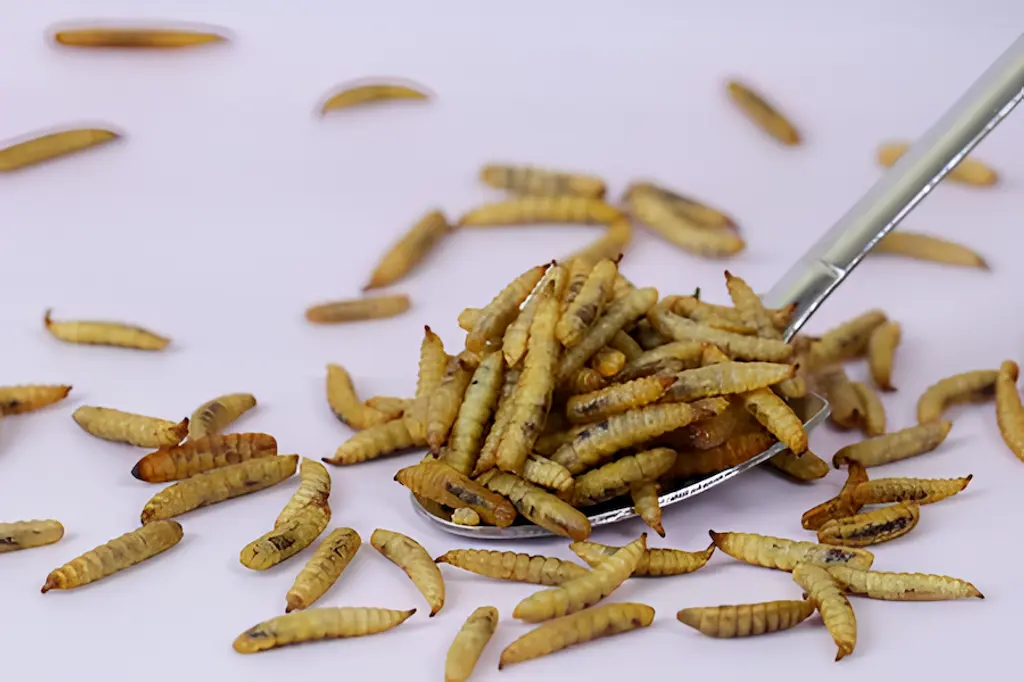
A new open-access paper in Cleaner Food Systems adds a useful technical question to the BSF nutrition discussion: can producers design the larval mineral profile, not only the protein and fat profile, by combining substrate choice with targeted mineral supplementation?
The paper, Nutritional enrichment of black soldier fly larvae towards a sustainable protein food supplement for livestock and poultry production, tested Hermetia illucens larvae reared on two feed bases: a conventional wheat bran and layer mash diet, and brewery spent grains. The authors supplemented both with zinc oxide, manganese oxide, copper oxide and elemental selenium nanoparticles, either in alginate gels or aqueous dispersions. The headline result is that the larvae accumulated minerals differently depending on both formulation and substrate. Alginate gels promoted zinc and selenium uptake, aqueous dispersions enhanced manganese and copper accumulation, and brewery spent grains were especially interesting for zinc and manganese enrichment.
That makes the paper more than another “BSF can upcycle brewery waste” study. It points toward a more product-specific model for insect meal: not just producing a generic protein ingredient from low-cost residues, but using substrate and supplementation design to produce larvae with a nutritional specification that matters to poultry or livestock formulators.
What the study actually found
The study reports that nanomineral supplementation changed the proximate and elemental profile of the larvae. Protein content reached up to 40.8%, fat up to 30.3%, with fiber and ash also modulated by treatment. Mineral accumulation was not uniform. Zinc and selenium uptake were stronger with alginate gel delivery, while manganese and copper responded better to aqueous dispersions.
The substrate result is the more operator-relevant part. Larvae grown on fortified brewery spent grains accumulated more zinc and manganese than larvae grown on the conventional feed base. The authors also report that multi-element mineral mixes did not show antagonistic interactions, which matters because feed supplementation is rarely about optimizing one mineral in isolation. If zinc, manganese, copper and selenium can be steered together without obvious uptake conflict, the door opens to more practical formulation work.
The paper also includes a poultry-relevance claim that deserves attention: zinc accumulated in BSFL was more bioavailable to poultry than a standard zinc oxide additive in completed broiler feed. That is the commercially interesting bridge. A mineral-enriched insect meal only matters if the mineral is available to the animal, not merely measurable in the ingredient.
Why brewery spent grains keep appearing in BSF research
Brewery spent grains are not a new BSF substrate, but the recent literature is becoming more specific about how they should be used. A 2024 paper in animal, Effects of brewery by-products on growth performance, bioconversion efficiency, nutritional profile, and microbiota and mycobiota of black soldier fly larvae, tested diets combining brewer’s spent grains (BSG) and brewer’s spent yeast (BSY). Its design used 3,000 six-day-old larvae across five diets, including BSG-BSY diets with 25, 50, 75 and 100 g/kg BSY inclusion, plus a Gainesville control.
The important operational signal was that BSG-based diets were viable, but not equivalent. Larvae on 75 and 100 g/kg BSY diets had higher weights at days 10 and 14 than lower yeast inclusions, and the 100 g/kg BSY treatment produced the highest final larval weight among the brewery by-product diets. The 75 and 100 g/kg BSY diets also improved bioconversion efficiency corrected for residue compared with lower BSY treatments, while survival, development time, reduction rate and waste reduction index were similar among the BSG-BSY diets.
A separate 2021 Insects paper, Effect of Processed Beverage By-Product-Based Diets on Biological Parameters, Conversion Efficiency and Body Composition of Hermetia illucens, reached a similar practical conclusion from a different angle. BSF larvae were reared successfully on several beverage by-product diets, but not on spent coffee grounds alone. Brewer’s spent grains and BSG mixtures enriched with brewer’s yeast performed better than coffee-only diets. The paper also gives useful waste-context numbers: about 20 kg of wet BSG per 100 L of beer, with Europe producing roughly 3.4 million tons of BSG annually.
Taken together, these papers make brewery residues look less like a generic cheap substrate and more like a formulation platform. BSG provides volume and fiber-rich material, BSY can improve performance, and the 2026 paper suggests fortified BSG may also improve targeted mineral enrichment.
The commercial question is not protein, it is specification
Most BSF ingredient discussions still default to crude protein, fat, amino acids and price per tonne. Those remain central, but they are not enough if insect meal is competing inside formulated poultry, pig, aquafeed or pet food diets. Formulators buy a specification, and mineral profile is part of that specification.
The 2026 paper’s value is that it reframes BSFL as a possible carrier of bioavailable micronutrients. If zinc-enriched BSFL can outperform zinc oxide in poultry bioavailability, the ingredient may have a value proposition beyond protein replacement. It becomes part protein ingredient, part mineral delivery vehicle, part circular substrate story.
That is attractive, but it also raises harder questions. Mineral enrichment has to be repeatable across batches, substrates, seasons, suppliers and rearing conditions. A producer using brewery spent grains cannot assume a stable substrate unless the brewery input is characterized and controlled. Moisture, fiber, protein, yeast residue, pH, microbial load, storage time and fermentation behavior can all shift the larvae’s growth and composition. The more precisely the insect meal is sold, the more tightly the upstream substrate must be managed.
There is also a regulatory and customer-acceptance layer. In the EU, insect producers remain under general food and feed safety obligations, and IPIFF summarizes that farmed insects used for food or feed are generally limited to materials of vegetal origin, with specific permitted exceptions such as milk, eggs, honey, rendered fat and non-ruminant blood products, while manure, catering waste and many animal-derived streams remain prohibited. Brewery spent grains fit much more comfortably inside that logic than urban mixed food waste, but mineral fortification still has to be evaluated against feed-additive rules, customer specifications, residue limits and national competent authority interpretation.
What a BSF operator should take from this
The immediate lesson is not “buy nanominerals and enrich larvae.” The paper is early-stage research, and nanoparticle use in feed chains will require careful safety, regulatory and customer review. The useful operational lesson is narrower: substrate design and micronutrient strategy may become part of the product-development toolkit for insect meal.
For producers, that points to several practical workstreams. First, brewery side streams should be characterized as ingredients, not treated as interchangeable waste. The BSG-BSY ratio, storage conditions and microbial behavior can change growth, bioconversion and the final larval profile. Second, mineral accumulation should be measured against animal bioavailability, not just larval elemental concentration. Third, any enriched ingredient must be evaluated as a repeatable product under real plant variability, not a single laboratory treatment.
For feed customers, the paper suggests a different way to interrogate BSF ingredients. Instead of asking only for protein, fat, amino acids and microbiological certificates, a nutritionist can ask whether the producer can intentionally control zinc, manganese, copper or selenium levels, how stable those values are, and whether bioavailability data exists in the target species.
For the sector, the unresolved tension is economic. Mineral enrichment only matters if the premium exceeds the added cost of supplementation, substrate control, testing, compliance and customer qualification. If it does, BSFL could move from commodity insect meal toward more differentiated feed ingredients. If it does not, the idea may remain a good paper with limited plant-level adoption.
The most interesting part of the 2026 study is therefore not the word “nano.” It is the combination of a real industrial side stream, brewery spent grains, with a measurable nutritional target. That is where BSF production becomes less about waste disposal with protein as a by-product, and more about designing insect biomass for a specific feed function.
Sources
- Subbareddy Mekapothula et al. Nutritional enrichment of black soldier fly larvae towards a sustainable protein food supplement for livestock and poultry production. Cleaner Food Systems, volume 3, article 100042, June 2026. DOI: 10.1016/j.clfs.2026.100042.
- A. Resconi et al. Effects of brewery by-products on growth performance, bioconversion efficiency, nutritional profile, and microbiota and mycobiota of black soldier fly larvae. animal, volume 18, issue 9, article 101288, September 2024. DOI: 10.1016/j.animal.2024.101288.
- Sideris et al. Effect of Processed Beverage By-Product-Based Diets on Biological Parameters, Conversion Efficiency and Body Composition of Hermetia illucens. Insects, 2021, 12(5), 475. DOI: 10.3390/insects12050475.
- IPIFF. Insects As Feed EU Legislation: Aquaculture, Poultry & Pig Species.