.jpg)
Innovafeed has raised €51 million in new financing, mostly from existing shareholders and banking partners, in a round that marks a more focused phase for the French insect ingredient company. The news has been reported by EU-Startups, Aquafeed, The Fish Site, and PetfoodIndustry. Named supporters include Creadev, QIA, Temasek, FFC, ABC Impact, ADM, and banking partners.
The round is not being presented as a fresh attempt to prove the industrial BSF model. Innovafeed is already past that stage in its own narrative. After the €250 million Series D announced in 2022, covered at the time by AgFunderNews and SeafoodSource, this new financing is framed around commercial growth, operational efficiency, and concentration of activity around the company’s Nesle site.
Nesle is now the key site to watch
The strongest part of the announcement is what Innovafeed says about Nesle. The company says the site is fully operational and has produced more than 15,000 tonnes of protein and oil over three years. It also reports a 10x increase in production volumes and manufacturing costs divided by 7. Several reports repeat the claim that Innovafeed’s production scale is 3x larger than the world’s second-largest insect player.
Those figures are useful because they give the sector something more concrete than funding size. They point to the questions that now matter for large-scale BSF producers: how fast volume can rise, how far unit cost can fall, how stable the process is at commercial scale, and whether the output can be sold repeatedly into markets with enough margin.
The missing information is still the information operators would most like to see. Innovafeed has not publicly given cost per tonne by product, plant utilisation, gross margin by application, energy intensity, feedstock economics, or the split between learning-curve effects and advantages specific to its Nesle integration. The published numbers are important, but they still do not allow a direct comparison with fishmeal, poultry meal, soy protein concentrate, or specialty pet food ingredients on delivered economics.
Nesle has been moving toward this role for some time. Innovafeed previously announced the third expansion phase of the site, bringing it to 55,000 m² and increasing larval production capacity fivefold, according to the company’s Nesle expansion announcement.
Hilucia moves into the commercial foreground
The new financing is also tied to the commercial development of Hilucia™, Innovafeed’s ingredient brand based on Hermetia illucens. The brand was launched in 2024 across pets, monogastrics, aquaculture, and agriculture, according to Innovafeed’s Hilucia announcement and Petfood Processing.
That shift matters. Selling insect protein mainly as a sustainable replacement ingredient is a difficult position if the price gap with conventional proteins remains wide. The more interesting commercial route is functional positioning: digestibility, palatability, animal health, growth performance, oil properties, and species-specific formulation value.
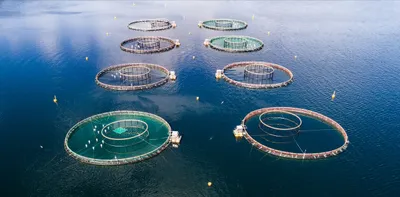
Aquaculture is the clearest signal in the current coverage. Fabio Brambilla, nutritionist at NaturAlleva, is quoted by Aquafeed and The Fish Site saying the company has studied the raw material for sea bass, sea bream, and trout for years and has decided to use the ingredients “on a very broad scale.” For the sector, that is more relevant than another generic endorsement. It suggests a path from multi-year validation to wider inclusion in Mediterranean aquaculture species.
Pet food remains just as important. ADM is a supporter in the current financing coverage and is already tied to Innovafeed’s North American strategy. In 2024, Innovafeed and ADM opened the North American Insect Innovation Center in Decatur, Illinois. ADM’s release says the companies had already commercialised Hilucia insect ingredients for the North American pet food market since 2023. It also describes a future large-scale Decatur facility connected to ADM’s corn wet mill by-products, with projected annual recovery of up to 300,000 tons of by-products.
The larger Decatur concept is described with projected annual outputs of up to 60,000 metric tons of animal feed protein, 20,000 metric tons of oils for poultry and swine rations, and 400,000 metric tons of soil amendment. That context, also covered by FoodIngredientsFirst and The Fish Site, makes the current emphasis on pet food easier to understand.
Gouzeaucourt is being folded into Nesle
The financing comes with restructuring. Innovafeed plans to reduce zootechnical R&D activities, integrate activities from its historical Gouzeaucourt site into Nesle, and cut 60 positions, with roughly two-thirds of the affected roles at Gouzeaucourt. This has been reported by PetfoodIndustry, Aquafeed, and SalmonBusiness.
That is not a side note. It is part of the same story as the financing. Innovafeed is saying that the industrialisation phase has reached enough maturity to reduce parts of the R&D and industrial development organisation and concentrate on commercial execution.
This is a difficult transition for insect companies. The capabilities needed to solve rearing, genetics, substrate handling, process engineering, and plant ramp-up are not the same as the capabilities needed to sell repeatable volumes into pet food and aquaculture value chains. The restructuring suggests Innovafeed is making that organisational change now, not after another long industrial development cycle.
What the sector still cannot see
The announcement gives more substance than most funding news in the insect sector, but it still leaves the essential economic questions open. “Costs divided by seven” is meaningful only if the baseline, product split, utilisation, depreciation, and delivered cost are eventually understood. Annual revenue doubling is positive, but the absolute revenue base and margin profile matter more than the growth rate alone.
The product mix also needs watching. Protein, oil, soil amendment, and functional branded ingredients do not have the same margin structure. The current tonnage figure aggregates protein and oil, while the strategic language points toward higher-value functional markets.
Customer depth is another open question. NaturAlleva is a useful aquaculture signal, and ADM provides important North American pet food context, but the breadth of recurring demand is still not visible. The same applies to the larger US facility: the Decatur innovation center is strategically important, but the timing and financing path for full-scale deployment remain unclear.
For BSF operators, the interesting question is now narrower than “can this be produced industrially?” Innovafeed is putting forward a more demanding benchmark: whether an industrial BSF producer can turn scale into margin, customer retention, and defensible biological or process advantage.