.jpg)
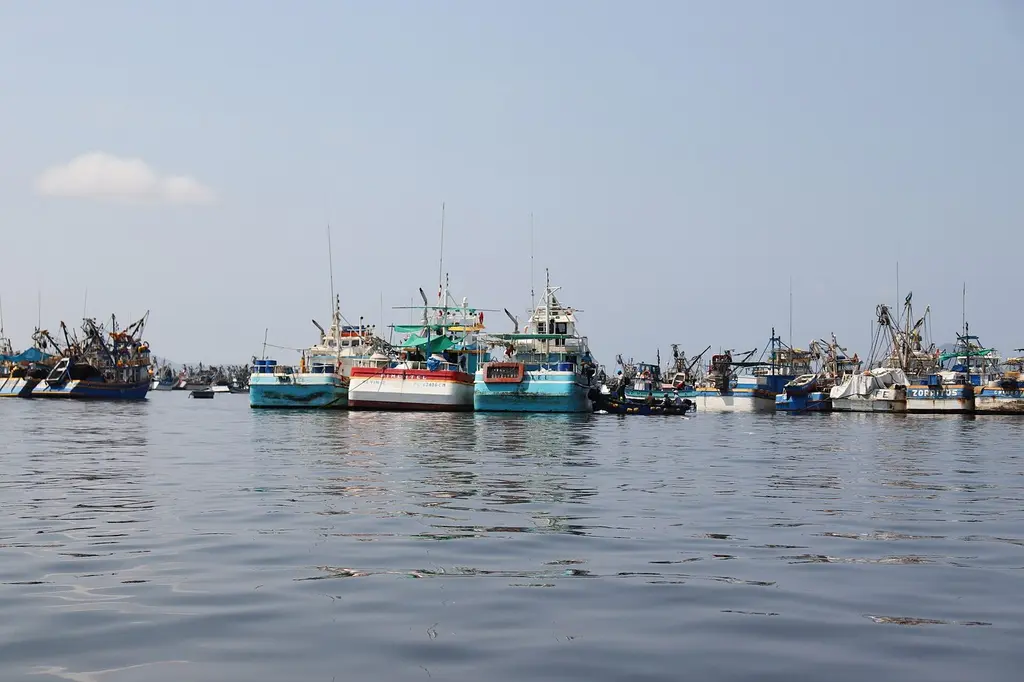
Peru’s 2026 anchoveta ban is a live feed-security test for aquafeed, and a reason to treat BSF as a qualified alternative rather than an emergency substitute. The latest development is not simply that fishmeal output is down. It is that the world’s most important anchoveta fishery is being managed through closures, juvenile-catch controls and real-time monitoring under difficult environmental conditions.
On 11 June, IFFO reported that Peruvian authorities had extended a fishing ban in the maritime area from the northern limit of Peru’s domain to 16°00′S. No termination date had been announced at the time. IFFO linked the measure to ongoing Coastal El Niño conditions, warm waters and a high share of juvenile fish.
That makes this a useful update to the broader marine-ingredient pressure already covered in our previous post on fishmeal tightness and BSF’s aquafeed opportunity. The new point is not another generic argument for alternatives. It is a clearer example of how a biologically responsible closure can still create ingredient risk for aquafeed buyers.
What changed in Peru
IFFO’s June update said April 2026 fishmeal production fell 21% year on year, while cumulative production was down 26% versus 2025. Fish oil output was also lower, with April production down 19% and cumulative output down 14%. The data came from IFFO members in Chile, Denmark, the Faroe Islands, Iceland, Ivory Coast, Mauritius, Norway, the UK, the US, Peru, South Africa and Spain, representing about 40% of global fishmeal production and 50% of fish oil output.
The Peruvian component matters because IFFO says Peru normally accounts for about 20% of global fishmeal and fish oil production. When Peru slows, formulators do not simply see a local fishery issue. They see a global raw-material signal.
The detail from Peru’s own authorities is more important than the headline. PRODUCE reported that the 2026 north-centre anchoveta quota was 1,914,049 tonnes. By 26 April, cumulative landings had reached 439,535 tonnes, equal to 23% of the quota. It also reported 167,542 tonnes of incidental juvenile catch, within the ranges projected by IMARPE.
PRODUCE described a management model based on electronic logbooks, real-time reporting, satellite monitoring and targeted preventive closures. It also stated that IMARPE had set a maximum juvenile incidental-catch threshold of 488,000 tonnes. If that threshold were reached, the season would close automatically to protect stock renewal.
That is the central lesson. Aquafeed is not only exposed to bad management or overfishing. It is also exposed to responsible management when the biology demands restraint.
The feed-security implication
A fishing ban can be the right biological decision and still be a supply-chain problem. Those two facts are not contradictory.
For feed mills, the risk is timing. A closure does not need to destroy annual supply to disrupt procurement. It only has to arrive when inventories are thin, demand is firm, alternative origins are weaker or buyers are already competing for the same high-quality marine ingredient volumes. That is why Peru’s anchoveta season remains disproportionately important.
The price signal is already visible. In a Bloomberg Opinion column syndicated by the Taipei Times, Javier Blas wrote that global fishmeal production had fallen by as much as 40% from a year earlier and that wholesale fishmeal had “nearly doubled” to an all-time high of US$2,990 per metric ton in late June, with further increases likely. The same piece connected that move directly to the anchoveta shock and warned that higher feed prices could push up farmed seafood costs over the following year.
This should be read alongside the broader public benchmark, not confused with it. YCharts’ World Bank-derived Fish Meal Price (Any Origin) series put June 2026 at US$2,145 per metric ton, up from US$1,688 in June 2025. The Bloomberg figure appears to refer to tighter wholesale market conditions at the stressed end of the market, while the World Bank series is a broader monthly benchmark. Both point in the same direction: fishmeal is not just scarce in volume terms, it is repricing.
This is also why the substitution debate often misses the point. Fishmeal is not disappearing. IFFO’s analysis of FAO’s State of World Fisheries and Aquaculture 2026 argues that fishmeal and fish oil production has been broadly stable since the mid-2000s, averaging around 5 million tonnes and 1 million tonnes respectively. It also notes that by-products supplied 34% of global fishmeal and 54% of fish oil production in 2024.
The issue is allocation. Stable marine-ingredient supply against a growing aquaculture sector means fishmeal and fish oil become more strategic. They are used where their digestibility, palatability, amino acid profile, minerals, EPA and DHA delivery, broodstock value or early-stage nutrition justify them. Everything around those ingredients has to absorb more of the volatility.
Where BSF fits, and where it does not
Black soldier fly meal should not be marketed as a direct answer to Peru’s anchoveta ban. That would be too crude. BSF meal does not solve the EPA and DHA constraint, and it cannot replace the functional breadth of fishmeal in every species or life stage.
Its stronger role is inside a diversified formulation strategy. Insect meal can contribute digestible animal protein, palatability, medium-chain fatty acids in full-fat formats, and functional effects that may be useful in plant-heavy or disease-pressure diets. That is a different argument from tonne-for-tonne replacement.
For producers, the commercial implication is practical: qualify products before the shock. Feed mills need species-specific data, stable specifications, realistic inclusion levels and clear product definitions. They need to know whether they are buying full-fat meal, defatted meal, hydrolysate, oil or another fraction, and how that product behaves alongside plant proteins, algal oil, microbial ingredients, attractants and health additives.
The Peruvian signal strengthens the case for that work. Not because it proves fishmeal is finished, but because it shows how narrow the system still is. A single climate-exposed fishery, managed carefully, can still push risk into global aquafeed.
The real warning from anchoveta
Peru’s anchoveta fishery is not the villain in this story. It is the warning light.
Climate variability changes fish distribution and recruitment. Authorities respond with quotas, closures and juvenile-protection measures. Marine ingredient output moves. Feed formulators absorb the shock through price, reformulation, inventory and supplier risk. Aquaculture producers then feel it through feed cost and availability.
That sequence will repeat. The companies that treat alternative ingredients as emergency substitutes will always be late. The companies that treat them as qualified components of feed resilience will have more room to move when the next Pacific signal reaches the feed mill.
Sources
- IFFO. Amid widespread weaker fishmeal and fish oil output than same period last year, Peru announces extended fishing ban. Published 11 June 2026.
- IFFO. Marine ingredients market trends: All eyes on Peru, while China’s domestic production of marine ingredients remains constrained. Published 1 June 2026.
- PRODUCE, Government of Peru. PRODUCE fortalece la sostenibilidad de la anchoveta mediante monitoreo en tiempo real y cierres preventivos. Published 28 April 2026.
- Javier Blas, Bloomberg Opinion, syndicated by Taipei Times. The world has an anchovy problem. Published 5 July 2026.
- YCharts. Fish Meal Price (Any Origin) (Monthly). World Bank-derived monthly price series.
- IFFO. The State of World Fisheries and Aquaculture 2026: an analysis through the marine ingredients lens.
Frequently asked questions
What fishing ban did Peru announce in June 2026?
On 11 June, IFFO reported that Peruvian authorities had extended a fishing ban in the maritime area from the northern limit of Peru's domain to 16°00′S. No termination date had been announced at the time. IFFO linked the measure to ongoing Coastal El Niño conditions, warm waters and a high share of juvenile fish.
How much of global fishmeal does Peru usually supply, and what did 2026 output do?
IFFO says Peru normally accounts for about 20% of global fishmeal and fish oil production. IFFO's June update said April 2026 fishmeal production fell 21% year on year, while cumulative production was down 26% versus 2025. Fish oil output was also lower, with April production down 19% and cumulative output down 14%.
What was the 2026 north-centre anchoveta quota, and how much had been landed by 26 April?
PRODUCE reported that the 2026 north-centre anchoveta quota was 1,914,049 tonnes. By 26 April, cumulative landings had reached 439,535 tonnes, equal to 23% of the quota. Incidental juvenile catch was 167,542 tonnes, within IMARPE ranges. IMARPE had set a maximum juvenile incidental-catch threshold of 488,000 tonnes; if reached, the season would close automatically.
What fishmeal prices does this post cite for mid-2026?
A Bloomberg Opinion column said wholesale fishmeal had nearly doubled to an all-time high of US$2,990 per metric ton in late June. YCharts' World Bank-derived Fish Meal Price (Any Origin) series put June 2026 at US$2,145 per metric ton, up from US$1,688 in June 2025. The post treats the Bloomberg figure as the stressed wholesale end and YCharts as a broader monthly benchmark.
Does this post treat BSF meal as a tonne-for-tonne replacement for Peruvian fishmeal?
No. Black soldier fly meal should not be marketed as a direct answer to Peru's anchoveta ban. BSF meal does not solve the EPA and DHA constraint, and it cannot replace the functional breadth of fishmeal in every species or life stage. Its stronger role is inside a diversified formulation strategy.