.jpg)
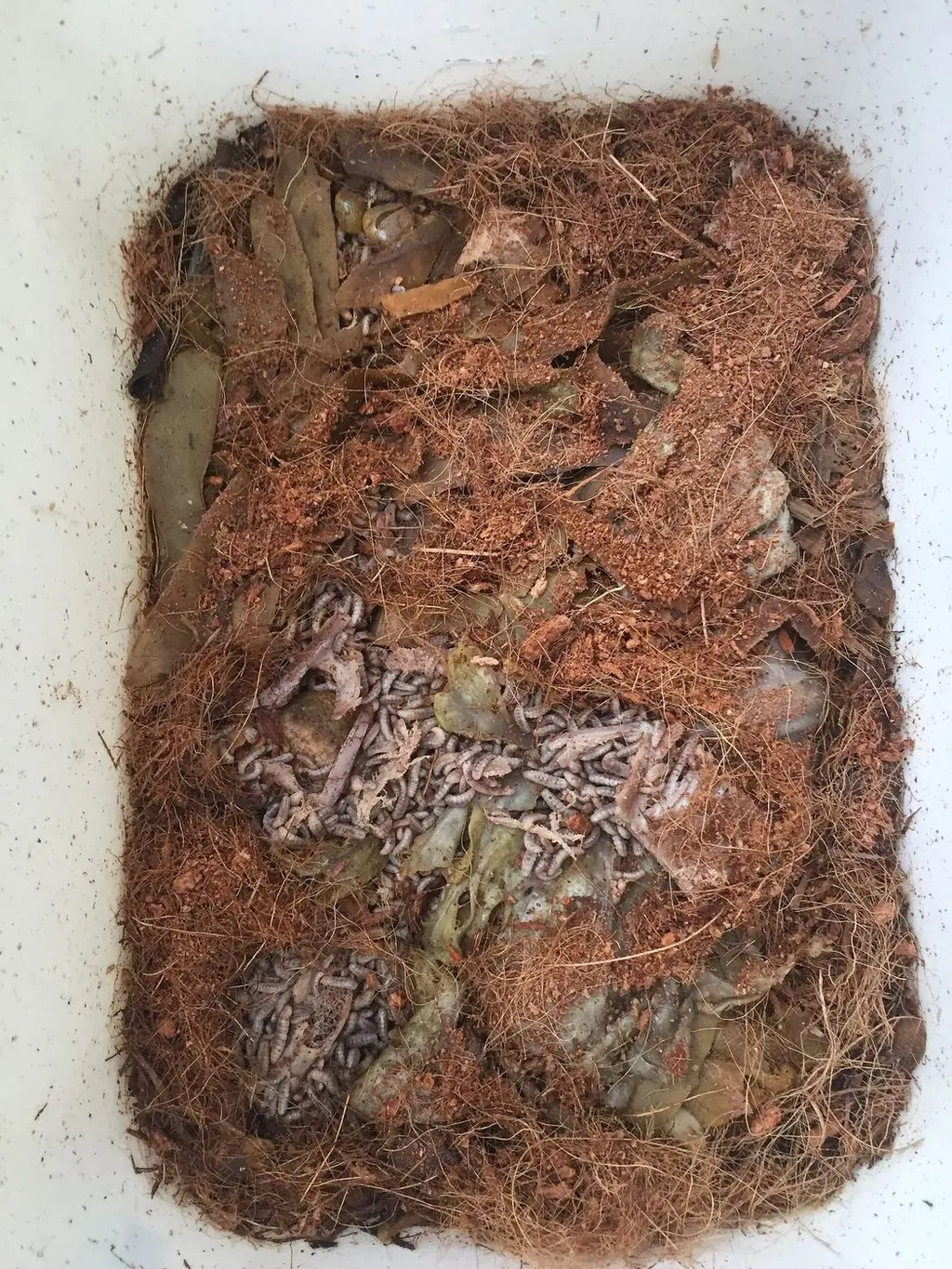
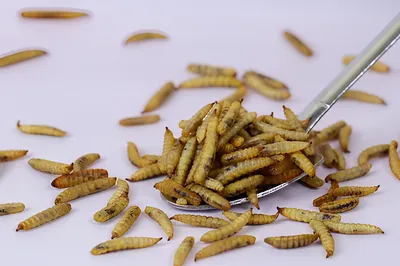
Substrate formulation in BSF production is usually discussed through protein, fat, moisture, fibre and particle structure. A new Waste Management paper adds a variable that deserves more routine attention in pilot design and procurement screening: ash.
The paper, An integrative framework linking substrate composition and physiological trade-offs to black soldier fly larval performance in organic waste valorization, compiled a global dataset of 905 rearing trials from 152 published studies. Its central finding is not that one substrate class wins. It is that larval performance depends on component balance, and that high substrate ash content can act as an overlooked constraint on biomass accumulation and bioconversion efficiency.
That matters because many industrially available residues are not clean nutritional recipes. They arrive with mineral load, salts, soil contamination, processing aids, packaging traces, variable water and non-digestible fractions. For a commercial plant, the practical question is not only whether a substrate has enough protein or energy. It is whether the full composition lets larvae allocate intake into biomass without forcing physiological trade-offs that reduce yield, conversion or product specification.
The useful part: ratios, not ingredient labels
According to the PubMed abstract for the paper, two empirical relationships stand out. A substrate Fat/Ash ratio above 0.8 was associated with higher biomass accumulation, while a Protein/Fat ratio below 2 was associated with higher bioconversion efficiency. The authors also observed a recurring trade-off between biomass accumulation and BSFL protein proportion.
Those thresholds should not be treated as universal formulation rules. The study is a cross-study synthesis, not a single industrial protocol with controlled genetics, feed rate, density, depth, moisture, temperature and harvest timing. But the ratios are useful because they shift formulation away from ingredient names and towards constraints that can be measured before a residue enters the larvae room.
For operators, the immediate lesson is simple: ash belongs in the same screening conversation as crude protein, fat, fibre, total solids and volatile solids. If two residues look similar on protein and moisture but one carries a much higher ash fraction, they may not be operationally equivalent. A low-cost residue can still be expensive if it depresses biomass gain, lengthens residence time, increases frass fraction without matching value, or pushes product composition outside the target range.
Ash is not just a lab number
Ash can represent valuable minerals, inert dilution, salt stress, soil load or a mixture of all four. The production consequence depends on the source. Brewery spent grains enriched for specific minerals are not the same problem as gritty vegetable waste with soil carryover, saline processing residues, or heterogeneous municipal organics.
That distinction is important for BSF plants that already think in substrate families. A bakery stream, a fruit and vegetable stream, a brewery stream and a prepared-food stream may each need a different correction logic. Some need nitrogen. Some need structure. Some need water removal. Some need lipid or energy density. The new paper makes the case that some also need ash dilution or exclusion, not because ash is automatically harmful, but because a high ash load can change the larva’s allocation problem.
This also connects to a previous Hermetia Blog article on lignocellulosic pretreatment and BSF waste valorisation. Pretreatment can make structural carbohydrates more accessible, but accessibility is only one part of formulation. A residue can be physically prepared and still be poorly balanced if inorganic load, lipid scarcity or protein-to-energy mismatch constrains larval performance.
What changes in pilot design
The paper is most useful as a pilot-design prompt. A substrate trial that only reports survival, final larval weight and waste reduction is no longer enough for good decision-making. At minimum, serious trials should keep the input-composition panel tied to performance outputs:
- substrate ash, fat and protein, with Fat/Ash and Protein/Fat ratios tracked explicitly;
- total solids and volatile solids, so high apparent reduction is not confused with water movement;
- larval biomass yield, development time and size distribution;
- larval protein and fat proportion, because more biomass is not always the same as the desired ingredient;
- residue/frass quantity and composition, especially when frass is a meaningful product line;
- mortality and abnormal development, not only average harvest weight.
The trade-off between biomass accumulation and protein proportion is commercially relevant. A plant selling whole dried larvae into pet food, defatted meal into aquafeed, oil, frass, or a mixed portfolio does not optimize the same endpoint. Higher biomass can be attractive if fat is monetized or if residue treatment economics dominate. Higher protein proportion may matter more where meal specification is the bottleneck. The same substrate can therefore be good or bad depending on the SKU and margin structure.
The microbiome signal is adjacent, not a shortcut
The same monitoring scan also surfaced a July 2026 Journal of Asia-Pacific Entomology paper, Cultivable gut bacterial diversity in black soldier fly larvae and the potential of Bacillus subtilis to improve growth performance and bioconversion of agricultural byproducts. Public metadata confirms the title, journal and DOI. I would not build numeric claims from that paper without the full abstract or text, but the paper title is enough to show why microbial supplementation is appearing beside substrate formulation in current BSF research.
That is relevant, but it should not be read as a shortcut around substrate formulation. Inoculation, fermentation or microbial steering may help unlock specific residues, especially agricultural by-products, but the substrate still has to be chemically and physically coherent. If ash load, salinity, fibre structure, moisture or protein-to-energy balance are wrong, adding a bacterium may improve part of the biology without fixing the economics.
This distinction also matters after recent work on microbial hazards in BSF rearing. As discussed in Hermetia Blog’s article on Bacillus cereus in BSF rearing, microbial presence is not automatically beneficial, and larvae should not be treated as a sanitation step. The interesting operational frontier is controlled microbial function, validated against performance and safety metrics, not broad faith in fermentation.
What a plant should do with this now
For a BSF facility buying or accepting heterogeneous residues, the new substrate-balance framework supports three practical changes.
First, add ash and ratio tracking to the incoming-substrate dashboard. If the lab panel already includes ash, do not leave it as a passive certificate value. Plot it against larval yield, bioconversion efficiency, development time, frass output and final meal composition.
Second, use blending to correct constraints, not to average names. A high-ash stream may need dilution with a more energy-dense residue. A high-protein, low-fat stream may not maximise conversion if energy is limiting. A wet stream may still need structure and drainage even when the nutrient ratios look promising.
Third, separate optimisation targets by product strategy. A substrate programme for maximum waste treatment throughput is not the same as a programme for high-protein meal, high-fat larvae, predictable frass or regulatory simplicity. The paper’s most useful contribution is that it makes these trade-offs explicit enough to test rather than argue about.
The open question is how stable the Fat/Ash and Protein/Fat thresholds remain inside commercial systems with fixed genetics, controlled climate, repeated supplier lots and plant-specific harvest rules. That is exactly why the finding is useful. It gives operators a measurable hypothesis to test against their own feedstocks instead of relying on broad substrate categories.
Sources
- An integrative framework linking substrate composition and physiological trade-offs to black soldier fly larval performance in organic waste valorization, Waste Management, DOI: 10.1016/j.wasman.2026.115747
- PubMed abstract for the Waste Management paper, including the 905-trial dataset, ash constraint and ratio findings
- Semantic Scholar entry for the Waste Management paper
- Cultivable gut bacterial diversity in black soldier fly larvae and the potential of Bacillus subtilis to improve growth performance and bioconversion of agricultural byproducts, Journal of Asia-Pacific Entomology, DOI: 10.1016/j.aspen.2026.102601
Frequently asked questions
Why does ash matter in BSF substrate formulation?
A Waste Management meta-analysis of 905 rearing trials from 152 published studies found that larval performance depends on component balance, and that high substrate ash can constrain biomass accumulation and bioconversion efficiency. Many industrial residues arrive with mineral load, salts, soil contamination or non-digestible fractions, so two streams with similar protein and moisture are not operationally equivalent if ash differs.
What Fat/Ash and Protein/Fat ratios did the paper report?
A substrate Fat/Ash ratio above 0.8 was associated with higher biomass accumulation. A Protein/Fat ratio below 2 was associated with higher bioconversion efficiency. The authors also observed a recurring trade-off between biomass accumulation and BSFL protein proportion.
Are those ratios universal formulation rules?
No. They should not be treated as universal formulation rules. The study is a cross-study synthesis, not a single industrial protocol with controlled genetics, feed rate, density, depth, moisture, temperature and harvest timing. The ratios are useful as measurable screening constraints before a residue enters the larvae room.
Is all substrate ash the same problem?
No. Ash can represent valuable minerals, inert dilution, salt stress, soil load or a mixture of all four. Brewery spent grains enriched for specific minerals are not the same problem as gritty vegetable waste with soil carryover, saline processing residues, or heterogeneous municipal organics. Some streams need ash dilution or exclusion because a high ash load can change the larva's allocation problem, not because ash is automatically harmful.
What should a commercial plant change in substrate pilots?
Add ash plus Fat/Ash and Protein/Fat tracking to the incoming-substrate dashboard, alongside total solids, volatile solids, larval yield, development time, larval protein and fat proportion, frass quantity and composition, and mortality. Use blending to correct constraints rather than averaging ingredient names. Separate optimisation targets by product strategy, because more biomass is not always the same as the desired meal, oil or frass specification.