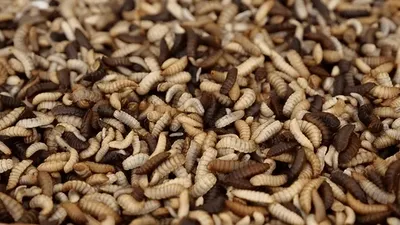
Start with a food manufacturer that pays to have production leftovers removed. Offer to collect a suitable, segregated stream for less than its current service costs. Use that material to rear larvae, then sell the larvae through a permitted feed or pet-food route.[18]
The manufacturer buys reliable collection. The larvae buyer buys an ingredient. The farm earns from both sides instead of asking a protein premium to carry the whole business.
That is the case for putting waste management first in the sales pitch. It does not mean abandoning protein sales. It means finding a customer with an existing problem and an existing budget before building production around a hoped-for premium.
The target is small and medium food manufacturers with safe, traceable production by-products, an avoidable removal bill, and no better feed outlet. In the EU, those materials must qualify for the feed route; “waste management” describes the customer problem, not permission to feed insects any kind of waste.[10][11]
Enorm shows the risk of depending on a premium
In May 2025, Enorm COO Jane Lind Sam told AgNavigator: “We experienced strong interest and premium pricing potential until late 2024.” As its Danish BSF facility approached full-scale readiness, she said, “the market momentum waned significantly.” The same interview described construction delays, prolonged commissioning, limited demand and financing constraints.[1]
The Horsens court subsequently issued Enorm’s bankruptcy decree on 30 October 2025, according to the court notice reproduced by Auktioner.dk.[2]
Enorm illustrates the risk of financing expensive capacity around demand and prices that may not hold. It does not prove that insect protein cannot work. Construction delays and financing problems were also part of management’s account.[1]
The Enorm bankruptcy chronology is already covered on this blog. The commercial question here is what another operator can sell before it asks a feed buyer to value a novel ingredient: a service that replaces an existing expense.
Waste management already has paying customers
Veolia reported €11.226 billion of solid-waste revenue and €1.566 billion of solid-waste EBITDA for 2025, with an EBITDA margin of 13.9%.[9] Customers already pay for waste services, and operators can earn an operating margin. Those diversified segment results are not food-waste-only figures, net profit, or margins a BSF farm can assume.
Ento sells the intake service as well as the output
Singapore’s Ento Industries provides a concrete example. In Singapore Management University’s August 2025 public account of its teaching case, founder Nathaniel Phua explained: “In contrast, Ento charges a service fee for 80% of the waste it receives.” Its parent company, Tiong Lam Supplies, was described as buying most of the materials it handled instead.[3]
The supplier pays Ento, rather than Ento paying for all its feedstock. The founder’s 80% figure describes fee-bearing intake, not revenue share or profit; the public summary does not define its measurement basis.[3]
A May 2026 Straits Times facility report put Ento’s food-waste processing at three to five tonnes per day.[20] SMU’s much larger “up to 50 tonnes” figure applies to Ento and Tiong Lam together, not to measured daily throughput through Ento’s larvae.[3]
A Singapore General Hospital project poster supplies customer-side corroboration. It records 43,494 kg of pre-served food waste sent off-site for valorisation during a September 2023 to April 2024 project involving Ento. The poster describes segregation of preparation material and the return of fertiliser for hospital landscaping.[23]
Ento also benefited from Tiong Lam’s existing truck network, according to SMU.[3] That detail deserves as much attention as the rearing technology. A new entrant must either reproduce the collection capability, buy it from a partner, or locate production where collection is largely unnecessary.
Ento demonstrates paid intake, collection logistics and product outlets. Its audited profitability was not available for this article. Copy the service proposition, not Singapore’s feedstock permissions: its hospital and kitchen streams are not a template for EU operations.
A waste-first pitch is not enough
Australia’s Goterra had already adopted the proposed narrative. In a June 2026 AgFunderNews interview, founder Olympia Yarger described a distributed waste-management network, paid intake, external larvae supply and processing partners. She claimed the business received “AUS $250 a ton” for food-organics intake.[5]
It also processed real material. A City of Sydney council minute reports that its Alexandria trial handled 721 tonnes between January 2025 and June 2026.[22] Nevertheless, ASIC records Goterra’s liquidation resolution and appointment date as 8 July 2026.[21]
Startup Daily, reporting on the administrators’ creditor report, put revenue at A$1.43 million and cost of goods sold at A$4.26 million for the eleven months to 31 May 2026. Those figures were not independently checked against the underlying creditor report, which was not obtained for this article.[4]
Goterra had gate fees, customers and working treatment capacity. It still failed.[4][5][22] Service revenue helps only when the fee covers the cost of delivering the service, including the capacity needed to honour the contract.
Target factories with a removal bill and a usable by-product
The proposed customer is a food processor whose identifiable production stream is currently expensive to remove, but could qualify for a lawful feed destination. Examples worth screening include a plant-only bakery’s segregated production crumbs and a fruit or vegetable processor’s safe trimmings. The EU feed-material catalogue includes products from bread, biscuit, wafer and pasta production, and products from processing fresh fruit and vegetables, including peel and pieces.[13]
Catalogue inclusion is a starting point, not proof that an individual batch is suitable. The operator still has to establish safety, composition, traceability and eligibility for the intended insect-feed route.[16][18]
The commercial opportunity lies in the service gap. A business may have enough material to justify a scheduled collection, yet too little to attract an efficient direct-feed buyer. A nearby operator could supply clean containers, segregation training, predictable pickups and batch records, then retain the value of the compliant larvae product. Whether that gap exists locally must be demonstrated with invoices and quotations.
The most useful prospect is not necessarily the company producing the cheapest-looking tonne. Screen the avoidable removal cost alongside kilograms per stop, dry matter, recipe consistency, contamination risk and the cost of preparing a usable substrate. A wet stream with attractive collection revenue may produce little saleable biomass. A dry bakery co-product may already have a valuable conventional feed outlet and require the insect operator to pay for it.
Compare against the best lawful alternative, including direct animal feeding where appropriate, composting and anaerobic digestion. Insect conversion adds costs; it needs a reason to outperform the alternatives for that particular stream. Material that can still be prevented from becoming surplus or used for human consumption should not be diverted merely to keep a rearing unit full. Spain’s food-waste law places prevention and human-use options ahead of animal feeding in its hierarchy, subject to its stated qualifications.[19]
Get paid to collect production by-products
An onion processor is a useful starting point. It could separate clean skins and trimmings during production, arrange their use as eligible insect feed, and pay the farm for collection instead of paying its current removal service. This is a contract to test, not a documented onion-processor case study.
Spain explicitly provides a route for this. Under Order APM/189/2018, agri-food production residues destined for animal feeding are considered by-products when they appear in the specified feed lists and meet all applicable feed requirements.[11] MAPA’s insect-feed guidance answers the question directly: agro-food industry by-products can feed insects intended for animal feed, provided the Order is met.[18]
The EU catalogue includes products from processing fresh fruit and vegetables, including peel and pieces, under entry 13.1.6. It also lists onion pulp under 4.7.1, with a specific description of a moist product containing skins and whole onions.[13] These entries support screening an onion-processing stream; they do not approve every batch of onion skins or establish that skins alone make a productive BSF diet. Check the actual material, feed safety and suitability before pricing the service.
Clean plant-only onion skins from a food-processing line are not SANDACH: that regime concerns animal by-products, not anything a factory wants removed.[17] Milk- or egg-containing former foods need the applicable animal-by-product route; “food-factory leftovers” is not a blanket feed permission.[18]
Payment for collection does not by itself make the material waste, nor does a positive sale price prove that it is not waste.[11][12] What matters is the actual destination and whether the material meets the applicable rules. Spanish law separately recognises qualifying production by-products and excludes non-animal feed materials from its scope in the aspects already regulated by feed legislation.[24]
Waste status does not begin only when someone assigns a waste code: Spain’s definition also covers a holder’s intention or obligation to discard it.[24] Arrange a genuine feed route from the production line, keep it segregated and document that destination. Do not rely on arriving before the waste truck or changing the invoice wording. Feed-hygiene rules also prevent a later operator from reversing a declaration that a batch is not intended for feed use.[14]
Keep factory production streams separate from catering waste. Catering waste remains prohibited for the relevant farmed-animal feeding route, even if it looks plant-based.[17] Faeces and packaging are also prohibited feed materials.[16]
The existing EU insect feedstock article covers the wider rules. Confirm the actual materials, activities and larvae destinations with the competent authority before committing capacity.
Price the collection and compliance work
Collection, preparation, storage and processing must be assessed separately from primary insect rearing. Regulation 183/2005 requires non-primary operations to maintain HACCP-based procedures; MAPA distinguishes primary rearing and its associated activities from additional operations that trigger different requirements.[14][18]
In Spain, mechanical food depackaging specifically requires prior establishment approval under RD 629/2019. The same decree provides a notification and listing arrangement for qualifying food establishments already registered in RGSEAA, rather than requiring every supplier to duplicate its ordinary food registration with the same general feed-register entry.[15]
A contract should identify the production process and ingredients, accepted quantities, segregation method, pickup schedule, rejection criteria and the lawful contingency route for rejected loads. It should also allocate the costs of contamination, missed collections and recipe changes.
Quote the route service as well as the accepted tonnes: a minimum monthly or per-stop charge can cover reserved capacity and lightly filled pickups, with a separate variable treatment rate. Agree weighing, minimum commitments, rejected-load and fallback charges, payment terms, price indexation, supplier shutdowns and termination notice. Price a backup lawful destination rather than assuming another processor will accept material during an outage. These are proposed terms, not clauses verified in Ento’s or Goterra’s contracts or a substitute for feed compliance.
The output must be specified just as carefully. Live larvae, whole dead insects and compliant processed animal protein are not interchangeable regulatory categories. A plan to “sell the larvae” needs an actual product form, permitted destination and processing route; drying alone does not automatically open a livestock-feed market.[18]
Build around a collection route that can pay for itself
The evidence does not justify declaring smaller units inherently superior. Grau and colleagues’ Surabaya study found the highest modeled net present value in its centralised scenario. It used 2020 prices, included no gate-fee revenue, targeted higher-value pet-food products and excluded incoming organic-waste transport from the scenario cost comparisons.[8] It cannot establish the best layout for a European SME collection service.
A useful design to test is local rearing around a dense cluster of qualified suppliers, with shared breeding or downstream processing where that reduces total cost. Compare its complete collection and processing bill against a more centralised alternative. Replicate only after the first route has demonstrated paid intake, compliant batches, realised product sales and adequate utilisation.
Run the initial commercial trial against delivered loads rather than laboratory best cases. Record accepted and rejected mass, dry matter, larval recovery, collection time, processing energy, residue destination and cash received. Include seasonal shutdowns and a funded fallback when rearing capacity is unavailable. A customer paying for reliable removal cannot be told that collection stops because the larvae are underperforming.
The customer-facing offer can then be specific: scheduled recovery of an agreed, eligible production stream at an agreed cost, with documented destinations. The larvae buyer receives a separate ingredient specification and supply commitment. The industry can lead with waste-management value without pretending that every intake is legally waste, every residue is feed, or every gate fee is profit.
Research checked on 4 November 2026. Company statements are attributed; operating throughput is distinguished from capacity and profitability. Grau’s main article text was reviewed; its reference tail was truncated. SMU’s public case summary was reviewed, not the paid teaching case. The legal discussion concerns EU/Spain rules and guidance, not facility-specific legal advice.
References
[1] https://www.agnavigator.com/Article/2025/05/05/enorm-seeks-new-investors-to-relaunch-operations - AgNavigator (2025). Enorm rethinking insect production business model. Interview with COO Jane Lind Sam, 5 May 2025.
[2] https://auktioner.dk/konkurs/s/enorm-biofactory-as - Retten i Horsens / Statstidende (2025). ENORM BioFactory A/S bankruptcy notice, decree 30 October 2025; notice 1 November 2025. Reproduced by Auktioner.dk.
[3] https://news.smu.edu.sg/news/2025/08/27/trash-treasure-how-ento-industries-developed-growing-sustainable-food-waste - Singapore Management University Corporate Communications (2025). From Trash to Treasure: How Ento Industries Developed a Growing Sustainable Food Waste Management Business with Black Soldier Flies, 27 August 2025. Public summary of a teaching case.
[4] https://www.startupdaily.net/topic/business/creditors-vote-to-put-food-waste-startup-goterra-in-liquidation - Startup Daily (2026). Creditors vote to put food waste startup Goterra in liquidation, 10 July 2026. Reporting on the administrators’ creditor report; underlying report not obtained.
[5] https://agfundernews.com/goterra-administrator-seeks-buyer-as-founder-warns-of-insect-ag-sector-contagion - AgFunderNews (2026). Goterra seeks buyer as founder warns of insect ag contagion, 23 June 2026. Interview with founder Olympia Yarger.
[8] https://doi.org/10.3920/jiff2022.0012 - M.G.P. Grau, B.M.A. Dortmans, J. Egger, G. Virard and C. Zurbrügg (2023; online 2022). Modelling the financial viability of centralised and decentralised black soldier fly larvae waste processing units in Surabaya, Indonesia. Journal of Insects as Food and Feed 9(3), 303-316. DOI: 10.3920/JIFF2022.0012. Main article text reviewed; reference tail truncated.
[9] https://www.veolia.com/sites/g/files/dvc4206/files/document/2026/02/Finance_PR_Veolia_2025_results.pdf - Veolia (2026). 2025 full-year results: record results above guidance. Financial results release, 26 February 2026, especially business-segment tables and commentary, pp. 10-12.
[10] https://eur-lex.europa.eu/legal-content/EN/TXT/?uri=CELEX:02008L0098-20251016 - European Parliament and Council (2008, consolidated 16 October 2025). Directive 2008/98/EC on waste, Articles 2, 3 and 5. Official Journal of the European Union.
[11] https://www.boe.es/eli/es/o/2018/02/20/apm189/con - Government of Spain (2018). Orden APM/189/2018, sole article: agri-food production residues destined for animal feeding. BOE.
[12] https://eur-lex.europa.eu/legal-content/EN/TXT/?uri=CELEX:52018XC0416(01) - European Commission (2018). Commission Notice 2018/C 133/02: Guidelines for the feed use of food no longer intended for human consumption. Official Journal C 133, 16 April 2018. Non-binding guidance.
[13] https://eur-lex.europa.eu/legal-content/EN/TXT/?uri=CELEX:02013R0068-20220724 - European Commission (2013, consolidated 24 July 2022). Regulation (EU) No 68/2013: Catalogue of feed materials, Part A(3) and entries 4.7.1, 13.1.1 and 13.1.6.
[14] https://eur-lex.europa.eu/legal-content/EN/TXT/?uri=CELEX:02005R0183-20220128 - European Parliament and Council (2005, consolidated 28 January 2022). Regulation (EC) No 183/2005 laying down requirements for feed hygiene, Articles 5, 6 and 9; Annex II.
[15] https://www.boe.es/buscar/act.php?id=BOE-A-2019-16636 - Government of Spain (2019, consolidated text updated 8 November 2025). Real Decreto 629/2019 on feed-establishment registration and approval, Articles 4, 5, 6 and 10. BOE.
[16] https://eur-lex.europa.eu/legal-content/EN/TXT/?uri=CELEX:02009R0767-20181226 - European Parliament and Council (2009, consolidated 26 December 2018). Regulation (EC) No 767/2009 on the placing on the market and use of feed, Article 6 and Annex III.
[17] https://eur-lex.europa.eu/legal-content/EN/TXT/?uri=CELEX:02009R1069-20191214 - European Parliament and Council (2009, consolidated 14 December 2019). Regulation (EC) No 1069/2009 on animal by-products, Articles 2-4 and 11(1)(b).
[18] https://www.mapa.gob.es/dam/mapa/contenido/ganaderia/temas/alimentacion-animal/informacion-de-interes/otros-documentos/procedimientos-y-documentos-cncaa-publicos/2020-doccncaa4_2020preguntasyrespuestasusodeinsectosenalimentacionanimal-aprobado04-06-2024.pdf - MAPA / CNCAA (2024). Preguntas y respuestas sobre el uso de insectos en alimentación animal, DOC CNCAA 4/2020 version 4, approved 4 June 2024, especially P4-P5, P9-P11 and P20-P22. Spanish administrative guidance.
[19] https://www.boe.es/buscar/act.php?id=BOE-A-2025-6597 - Government of Spain (2025). Ley 1/2025 de prevencion de las perdidas y el desperdicio alimentario, Article 5. BOE.
[20] https://www.straitstimes.com/multimedia/photos/ento-industries-black-soldier-flies-singapore - Kevin Lim (2026). Small bugs, big appetites: The tiny army upcycling Singapore’s food waste. The Straits Times, 6 May 2026.
[21] https://publishednotices.asic.gov.au/browsesearch-notices/notice-details/Goterra-Pty-Ltd-In-Liquidation-612974688/e2c94b2e-362b-443f-b37a-5062baf04ff4 - Australian Securities and Investments Commission (2026). Goterra Pty Ltd (In Liquidation), ACN 612 974 688: notice of deemed special resolution to wind up a company. Resolution 8 July 2026; notice 20 August 2026.
[22] https://meetings.cityofsydney.nsw.gov.au/mgDecisionDetails.aspx?IId=36676&Opt=1 - City of Sydney / Lord Mayor Clover Moore (2026). Uncertainty in the Waste Infrastructure and Processing Sector. Council minute, 29 June 2026.
[23] https://www.singhealthacademy.edu.sg/content/dam/singhealth-web/academy/imported-assets/assets/documents/shm2024/shm2024-posters/environmental-sustainability/SHM_ES017%20-%20Chloe%20Theng%20Le%20Xin_SGH%20-%20Bringing%20Hospital%20Food%20Waste%20Back%20to%20Life%20with%20Black%20Soldier%20Flies.pdf - Theng Le Xin Chloe, Lim Su Kian Grace and Nathaniel Phua (2024). Bringing Hospital Food Waste Back to Life with Black Soldier Flies (BSFL). Singapore General Hospital / Ento Industries, SingHealth project poster; project September 2023-April 2024.
[24] https://www.boe.es/buscar/act.php?id=BOE-A-2022-5809 - Government of Spain (2022, consolidated text updated 2 April 2025). Ley 7/2022 de residuos y suelos contaminados para una economia circular, Articles 2(al), 3(3)(e) and 4. BOE.